GEOTECHNICAL ENGINEERING
LEXINGTON
HomeGround improvementVibrocompaction design

Vibrocompaction Design for Lexington Karst Terrain

Evidence-based design. Reliable delivery.

LEARN MORE

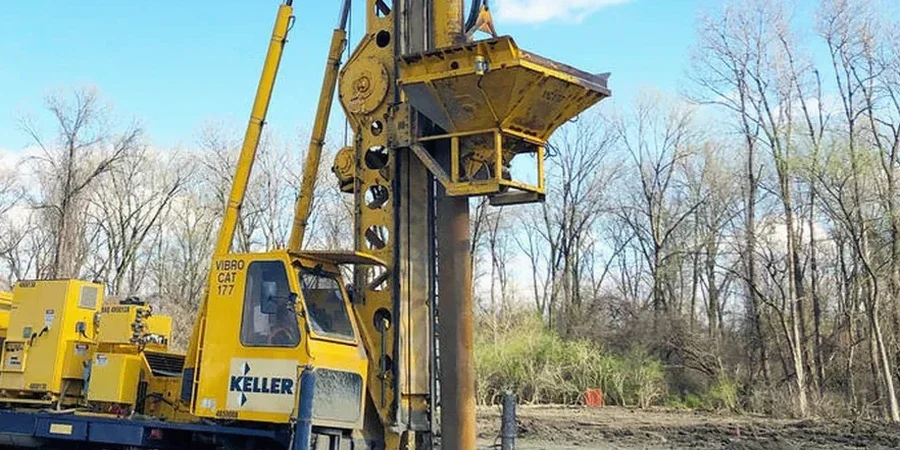
Lexington's expansion eastward into deeper residual clay and old alluvium has pushed engineers to stabilize fills over karstic limestone. The Inner Bluegrass geology creates a sharp contrast between competent rock and loose near-surface deposits—a profile that vibrocompaction handles well when designed correctly. We prepare vibrocompaction plans for commercial pads, warehouse slabs, and roadway embankments where differential settlement across pinnacled rock would otherwise be unacceptable. Field data from CPT soundings and grain-size curves feeds directly into the compaction grid, depth targets, and amperage profiles. Complementing the design with a CPT test lets us calibrate the required relative density before mobilization, which is critical when the contractor is on a tight schedule.

A three-foot spacing difference in the compaction grid can cut post-treatment settlement by half—or double it if the influence radius is misjudged.
Our service areas

How we work

The unconsolidated silty sands found in creek valleys south of Man o' War Boulevard often have fines content exceeding 15%, complicating standard vibrocompaction. Our design approach starts with ASTM D2487 classification of the target layer, then establishes the limiting fines percentage for the vibrator frequency and probe type. We specify compaction point spacing based on the influence radius measured during a pre-production trial grid—typically 6 to 10 feet for the depth range of 15 to 35 feet encountered in Fayette County. The design package includes lift thickness limits, water injection rates, and hold-time at refusal depth, all tied to the project's minimum relative density requirement, usually 70% to 85% depending on the structural load. We run settlement checks using Schmertmann's method modified for the post-compaction modulus derived from on-site testing.
Vibrocompaction Design for Lexington Karst Terrain
Technical reference — Lexington

Local geotechnical context

The contrast between the Hamburg Pavilion area and the older industrial lots along Winchester Road illustrates the risk clearly. Hamburg sits on thicker, looser alluvial deposits where untreated fill can settle 3 to 4 inches under slab loading within the first two years. Winchester Road's shallower residuum over rock is stiffer but riddled with pinnacles. A vibrocompaction design that ignores karst variability will leave soft pockets between limestone highs—exactly where post-construction distress concentrates. We map the rock surface with probe refusal data during the trial phase and adjust the grid to densify the deeper troughs. Skipping this step produces a false sense of improvement. Three inches of differential settlement across a 40-foot bay will crack a slab and misalign door frames, and the repair disrupts tenant operations for weeks.

Need a geotechnical assessment?

Reply within 24h.

Email: contact@geotechnicalengineering.biz

Explanatory video

Regulatory framework

IBC 2024 Chapter 18 – Soils and Foundations, ASCE 7-22 – Minimum Design Loads and Associated Criteria, ASTM D2487 – Classification of Soils for Engineering Purposes, ASTM D1586 – Standard Penetration Test (SPT), ASTM D5778 – Electronic Friction Cone and Piezocone Penetration Testing (CPT)

Reference parameters

ParameterTypical value
Design depth range (Lexington fills)15 to 35 ft
Target relative density (Dr)70% to 85%
Typical probe typeElectric vibrator, 130-180 kW
Compaction point spacing6 to 10 ft (trial-calibrated)
Maximum allowable fines content≤ 18% passing #200 sieve
Settlement verification methodPost-CPT + Schmertmann analysis
Governing standardIBC Chapter 18 / ASCE 7-22

Questions and answers

What does vibrocompaction design cost for a Lexington commercial site?

Design fees for a typical Lexington commercial pad or warehouse site run from US$1,520 to US$4,790. The spread depends on the number of CPT soundings required, the size of the trial grid, and whether the site has karst features that demand extra probe refusal mapping.

How does karst geology affect vibrocompaction design in Fayette County?

Karst creates an irregular rock surface with deep soil-filled troughs between pinnacles. The design must identify these troughs during probing and concentrate compaction effort in the deeper zones. We adjust vertical step intervals and hold times to densify the full depth of each trough without bridging across rock highs.

When is vibrocompaction not suitable for a Lexington site?

It becomes ineffective when fines content exceeds 18 to 20 percent passing the #200 sieve, or when the saturated silt layer dampens vibratory energy transmission. Sites with shallow rock less than 10 feet below grade also limit practical depth. In those cases we evaluate stone columns or rigid inclusions as alternatives.

Location and service area

We serve projects in Lexington and surrounding areas.

View larger map