GEOTECHNICAL ENGINEERING
LEXINGTON
HomeSlopes & WallsRetaining wall design

Retaining Wall Design in Lexington, KY: Geotechnical Engineering for the Bluegrass Region

Evidence-based design. Reliable delivery.

LEARN MORE

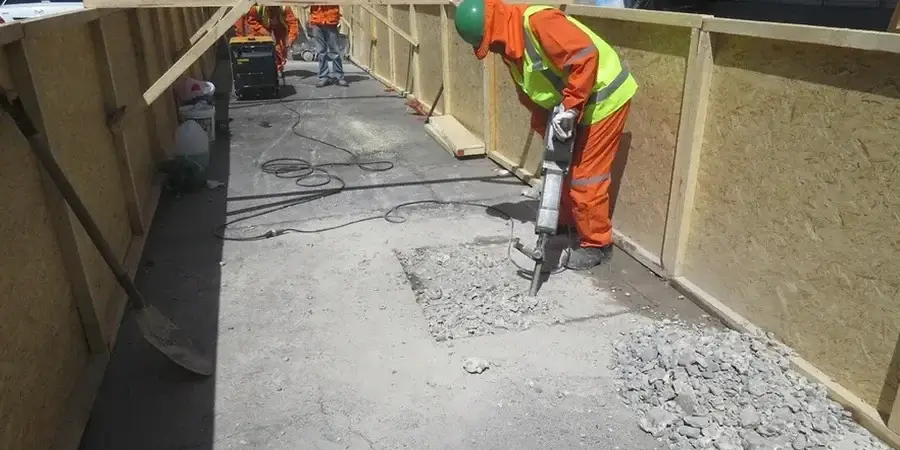
Lexington's urban fabric stretches across a landscape shaped by ancient Ordovician limestone, where the peaceful horse farms of the Bluegrass give way to growing commercial corridors along Nicholasville Road and Hamburg Pavilion. This historical development pattern, expanding outward from the Kentucky River palisades, has placed modern construction directly atop highly plastic clays and unpredictable pinnacled bedrock. A retaining wall design that fails to account for the residual soils of the Lexington Limestone formation courts differential settlement and sliding failures that can halt a project for months. Our geotechnical laboratory, operating under strict internal protocols aligned with ASTM D1586 and D2487 standards, approaches each site by first quantifying the lateral earth pressures generated by local CH and CL soils. For projects near the deeply incised stream valleys south of Man o' War Boulevard, we often integrate findings from a test pit investigation to visually confirm bedrock depth before finalizing stem geometry and heel dimensions.

A well-designed retaining wall in central Kentucky must manage not just the weight of the soil, but the relentless swell pressure of Fayette County's clay when it meets water.
Our service areas

How we work

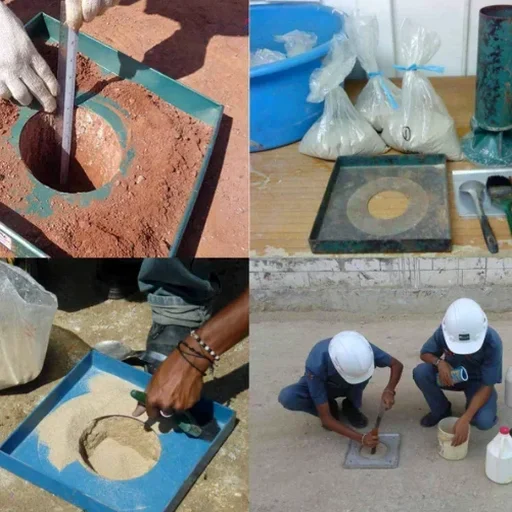
The subsurface contrast between downtown Lexington's dense urban core and the sprawling suburban estates near Beaumont Centre illustrates why site-specific retaining wall design is non-negotiable. Downtown, where fill overlies weathered shale, we frequently design cantilevered walls with extended shear keys to resist sliding on slickensided interfaces. Out toward the Hamburg area, deeper deposits of fat clay demand mechanically stabilized earth (MSE) solutions that accommodate significant swell pressures without compromising the reinforced zone. These conditions require careful classification—silty sands in one lot, lean clays in the next—and that variability drives our selection of drainage aggregates and filter fabrics. A grain size analysis on the backfill material becomes essential when designing the wall's drainage system, ensuring that fine particles won't migrate and clog the weep holes over successive freeze-thaw cycles that are characteristic of Kentucky winters.
Retaining Wall Design in Lexington, KY: Geotechnical Engineering for the Bluegrass Region
Technical reference — Lexington

Local geotechnical context

The geology of Lexington sits squarely within the Inner Bluegrass region, where the high shrink-swell potential of the Garrard Silt and Eden Clay formations can exert lateral pressures far exceeding Rankine's classical assumptions. A retaining wall constructed without addressing the perched groundwater tables common in the Lexington Limestone's epikarst zone will accumulate hydrostatic pressure behind the stem, often resulting in gradual bulging or sudden collapse after a heavy Kentucky thunderstorm. Terzaghi's principle of effective stress governs here: if the drainage system fails, the wall fails with it. The seismic hazard, while moderate, introduces a kh coefficient of 0.08 to 0.12 per the USGS 2475-year event for Fayette County, which we incorporate as a pseudo-static load case in our global stability checks to prevent a devastating rotational failure during the long-term service life of the structure.

Need a geotechnical assessment?

Reply within 24h.

Email: contact@geotechnicalengineering.biz

Regulatory framework

IBC 2021 – Section 1807 (Retaining Walls), ASCE 7-22 – Minimum Design Loads, ASTM D2487 – Unified Soil Classification, AASHTO LRFD Bridge Design Specs (if applicable)

Reference parameters

ParameterTypical value
Internal friction angle (φ')24° – 32° (residual clay)
Cohesion (c')0 – 500 psf (short-term)
Active earth pressure coefficient (Ka)0.28 – 0.42 (Coulomb)
Allowable bearing capacity2,000 – 6,000 psf
Backfill unit weight115 – 130 pcf
Design life50 – 75 years (per IBC)
Sliding factor of safety (min)1.5 (static)
Overturning factor of safety (min)2.0

Questions and answers

What type of retaining wall is best for Lexington's clay soil?

In Fayette County, the choice between a cantilever wall and an MSE wall depends on the plasticity index of the clay. For high-PI clays above 25%, MSE walls with geogrid reinforcement offer better tolerance to differential settlement than rigid concrete stems. Cantilever walls can work well if founded below the active zone of seasonal moisture variation, typically 3 to 4 feet deep in Lexington.

How much does a retaining wall design cost for a Lexington residential project?

Retaining wall design fees in Fayette County range from US$1,030 for a straightforward gravity wall under 4 feet to US$3,590 for an engineered MSE wall or cantilever wall exceeding 6 feet with full drainage plans. The final figure depends on the wall height, surcharge loads, and the complexity of the karstic bedrock profile.

Do I need a building permit for a retaining wall in Lexington?

Yes. Lexington-Fayette Urban County Government requires a permit for any retaining wall over 4 feet in height measured from the bottom of the footing to the top of the wall, or any wall supporting a surcharge. Our design package includes the sealed engineering calculations and drawings required for permit approval.

How long does the design process take?

A typical retaining wall design package for a Lexington project takes 10 to 15 business days after we receive the geotechnical report and survey. During that period, we complete the lateral earth pressure calculations, structural member sizing, global stability checks, and drainage details. Complex sites with karst features or adjacent structures may add 3 to 5 days to the timeline.

Location and service area

We serve projects in Lexington and surrounding areas.

View larger map