GEOTECHNICAL ENGINEERING
LEXINGTON
HomeInvestigationCPT (Cone Penetration Test)

CPT Testing in Lexington, KY — Cone Penetration Test for Deep Soil Profiling

Evidence-based design. Reliable delivery.

LEARN MORE

Lexington sits squarely on the Inner Bluegrass region, where the subsurface is anything but uniform. The famous karst topography means weathered limestone and pockets of residual clay can shift dramatically across a single parcel. A standard borehole program might miss those transitions, but a CPT test captures the continuous profile that's essential here. Our cone penetration testing rigs push through the stiff Maury silt loam down into the Ordovician limestone residuum, recording tip resistance, sleeve friction, and pore pressure every two centimeters. This density of data lets our engineers spot solution cavities, evaluate consolidation potential in the clay seams, and establish bearing strata without the sample disturbance that plagues split-spoon methods in these sensitive soils.

In Lexington's karst terrain, CPT provides the only continuous record of rockhead topography, revealing pinnacles and solution features that boreholes spaced 20 feet apart can completely miss.
Our service areas

How we work

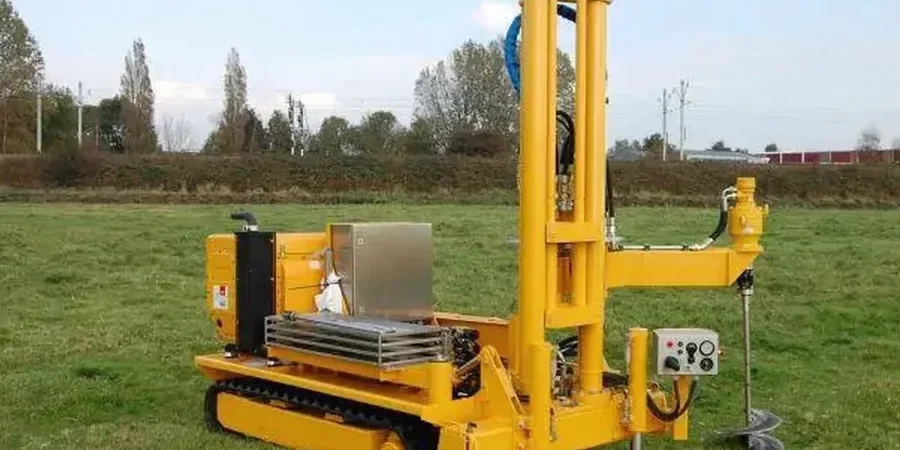
One common mistake we see across Fayette County is assuming uniform conditions beneath a building pad because the site looks flat. In reality, the epikarst zone beneath Lexington can be riddled with pinnacles and cutters that create a jagged rockhead profile. A CPT rig equipped with a seismic module maps this interface with precision, showing exactly where the competent limestone begins and where the soft infill persists. The test runs per ASTM D5778, with our 20-tonne truck-mounted unit generating the reaction force needed to penetrate the dense residuum at depths exceeding 40 feet. During the push, we monitor pore pressure dissipation curves to assess the drainage characteristics of the silty clays that overlie the bedrock, a parameter that directly influences settlement timeframes for shallow footings. Supplementing the cone data with our MASW survey capability helps correlate shear wave velocity to the tip resistance, giving a full picture of stiffness with depth.
CPT Testing in Lexington, KY — Cone Penetration Test for Deep Soil Profiling
Technical reference — Lexington

Local geotechnical context

The hydraulic rams on our CPT truck apply a steady 2 cm/sec push rate, quiet enough that you hear the pore pressure transducer responding long before you see the data on screen. That transducer is what separates a standard CPT from a piezocone — it reads the water pressure generated as the cone displaces the soil. In Lexington's low-permeability residual clays, a high excess pore pressure during penetration signals that the soil will consolidate slowly under load. If you skip this measurement, you lose the ability to estimate the coefficient of consolidation directly. Our team runs dissipation tests at zones of interest, stopping the push and recording the pressure decay over time. The shape of that curve tells us whether drainage is radial or vertical, and from that we calculate how quickly settlement will occur once the building is up.

Need a geotechnical assessment?

Reply within 24h.

Email: contact@geotechnicalengineering.biz

Regulatory framework

ASTM D5778 — Standard Test Method for Electronic Friction Cone and Piezocone Penetration Testing of Soils, IBC 2024 — International Building Code, Section 1803 Geotechnical Investigations, ASTM D7400 — Standard Test Methods for Downhole Seismic Testing

Reference parameters

ParameterTypical value
Cone TypePiezocone (CPTu) with u2 filter element
Maximum Thrust20 tonnes (200 kN)
Typical Depth RangeUp to 80 feet in Bluegrass residuum
Data Interval2 cm continuous (tip resistance, sleeve, pore pressure)
Dissipation TestsAt select horizons to evaluate consolidation
Seismic ModuleOptional downhole S-wave velocity profiling

Questions and answers

What does a CPT test cost in Lexington?

CPT testing in the Lexington area typically runs between US$180 and US$270 per meter, depending on depth, access constraints, and whether seismic or dissipation modules are required. A 40-foot profile with standard piezocone data will generally fall in that range. We provide a firm quote after reviewing the site location and target depth.

How does CPT compare to SPT drilling in karst terrain?

CPT provides a continuous, high-resolution record that reveals the exact depth and shape of the rockhead, including narrow solution features that a standard split-spoon sampler can easily miss. In Lexington's pinnacled limestone, this detail is critical. SPT still has value for sampling and for penetrating very dense rock, and we often recommend combining both methods on complex sites.

How long does a CPT test take on site?

A single CPT sounding to 40 or 50 feet in Lexington's residual soils typically takes 45 to 90 minutes, plus additional time for dissipation tests. A full day can usually accommodate three to four soundings with seismic measurements, depending on site access and setup.

Do you need soil samples alongside the CPT data?

CPT does not recover physical samples, so we often pair it with at least one sampled borehole per site. The continuous CPT profile guides where to take the most representative samples, and the soil index lab work calibrates the cone correlations for the specific clay mineralogy found in the Bluegrass region.

Location and service area

We serve projects in Lexington and surrounding areas.

View larger map