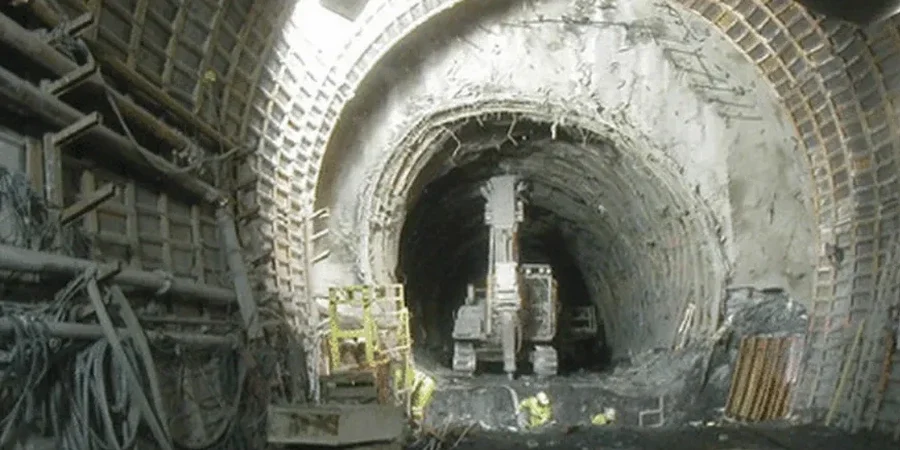
Lexington sits squarely on the Lexington Limestone formation, an Ordovician carbonate rock mantled by thick sequences of residual clay derived from millennia of chemical weathering. This isn't uniform soil—it's a layered profile where stiff, low-plasticity silty clay can transition within meters to zones of completely decomposed limestone riddled with solution cavities. For any tunnel alignment below the water table, which often fluctuates within 10 to 20 feet of ground surface in the Inner Bluegrass, the primary challenge is face stability in clayey soils that slake and soften when saturated. A tunnel boring machine advancing through this material encounters abruptly changing cutterhead torque demands, while an SEM heading can expertise crown settlement exceeding predictions if the pre-treatment grouting fails to seal karst conduits. Our geotechnical analysis integrates pressuremeter testing and lab-based residual strength parameters to capture the post-peak behavior of these weathered shales and clays before a single foot is excavated.
Tunneling through residual karst clay demands a design that accounts for post-peak strength loss and the potential for sudden water inflow through solution features.