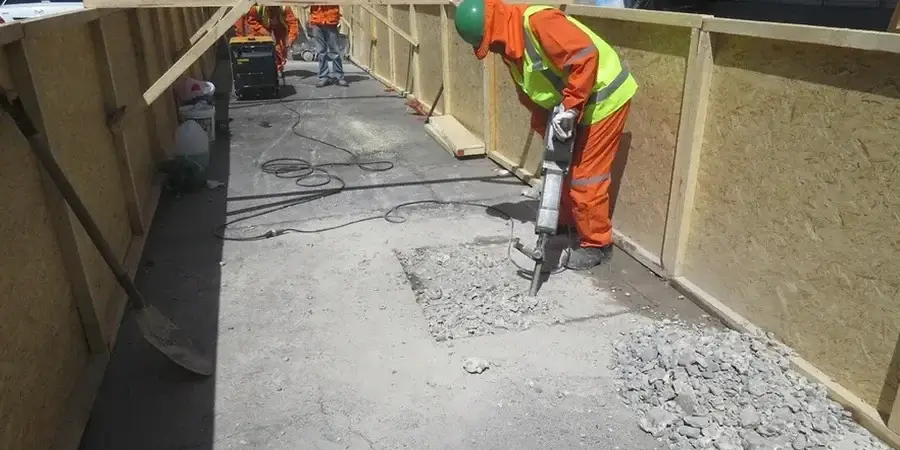
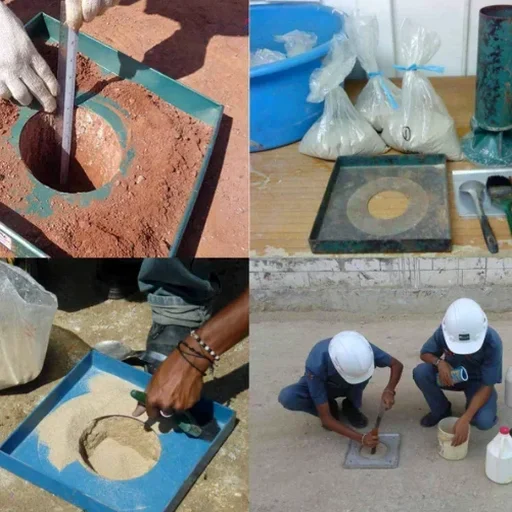
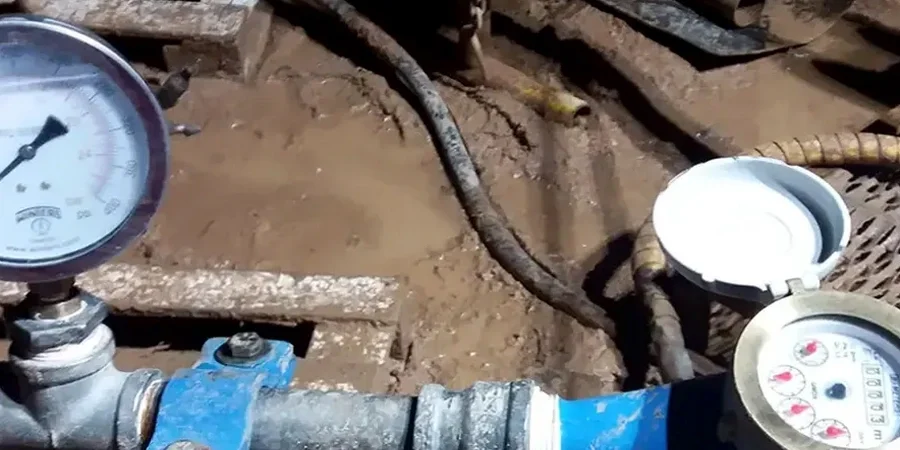
In Lexington, the karst topography underlying the city creates highly variable drainage conditions. Limestone bedrock sits beneath a mantle of residual clay, and solution channels can move groundwater fast. Standard lab tests on small samples do not capture this behavior. The test pits we excavate often reveal open fissures that a borehole alone might miss. We run field permeability tests to measure hydraulic conductivity at the formation scale. The Lefranc method works for soil and weathered rock above the water table. The Lugeon test applies to fractured bedrock zones where water pressure is injected in stages. Both methods produce data that local engineers need for dewatering design and infiltration analysis.
Karst limestone in Lexington can show Lugeon values from near zero to over 50 Lu within the same borehole. Stage testing is the only way to map flow paths.