GEOTECHNICAL ENGINEERING
LEXINGTON
HomeFoundationsRaft/mat foundation design

Mat Foundation Design in Lexington, KY — Geotechnical Approach

Evidence-based design. Reliable delivery.

LEARN MORE

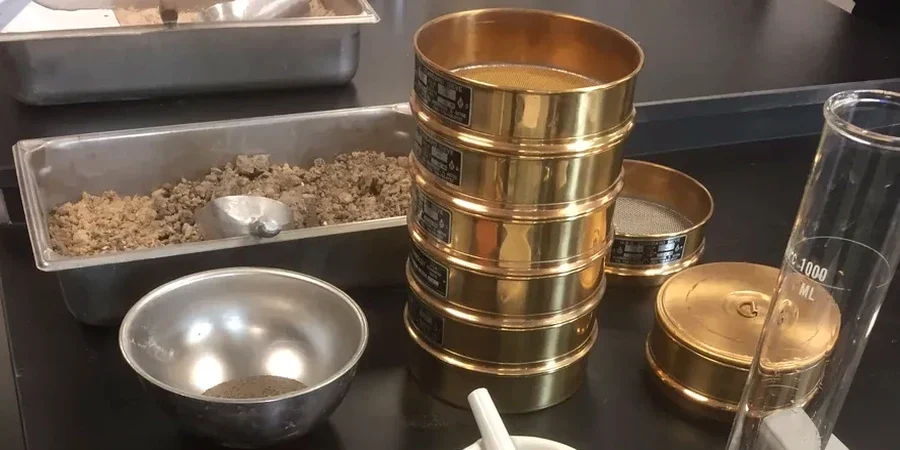
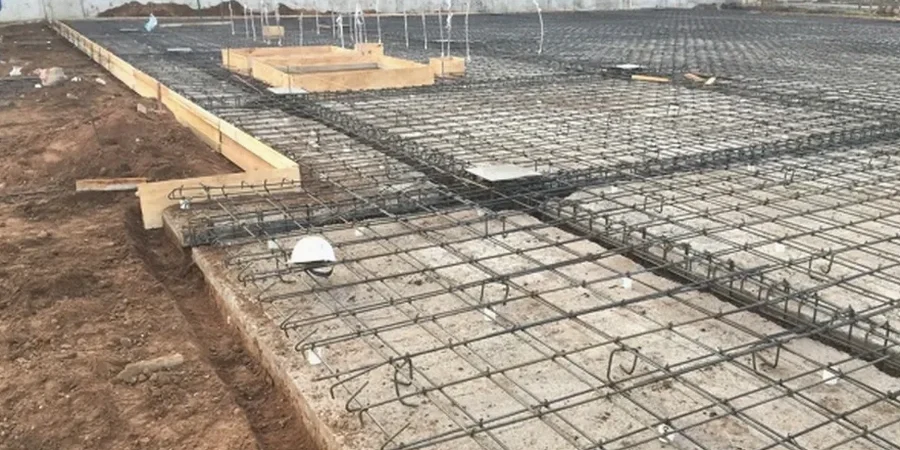
A four-story mixed-use building near the Distillery District sat on stiff silty clay with weathered limestone at 18 feet. The structural loads demanded uniform support across a variable profile. Designing a mat foundation here is not about generic formulas. It is about reading the Ordovician limestone dips, the depth of the Grier Member residuum, and how moisture fluctuates through the upper fat clay zones. We run site-specific bearing analysis and differential settlement modeling so the slab bridges soft spots without cracking partition walls. For deeper investigation, CPT testing refines stratigraphy where SPT data gets ambiguous, while grain size distribution confirms the clay fraction that controls shrink-swell potential around the slab perimeter.

A mat foundation in karst-influenced Lexington terrain works when the design anticipates rock pinnacles and residual clay pockets, not just uniform bearing.
Our service areas

How we work

Conditions shift noticeably between the Hamburg area and the tighter lots along Versailles Road. Hamburg sits on deeper residuum, often 20 to 30 feet of lean clay before hitting sound rock. Versailles Road sites encounter pinnacled bedrock and erratic boulders that create abrupt stiffness transitions under a mat. We model these transitions using subgrade reaction modulus profiles calibrated to site-specific borings. The mat thickness, reinforcement layout, and edge stiffening all respond to what the soil actually does, not what a textbook assumes. Settlement analysis follows a layered elastic approach. Where the rock surface slopes more than 10 percent, we evaluate sliding stability and add shear keys if needed. Every mat design accounts for the frost depth of 30 inches and the perched water tables that appear after heavy spring rain across Fayette County.
Mat Foundation Design in Lexington, KY — Geotechnical Approach
Technical reference — Lexington

Local geotechnical context

IBC 2021 Section 1803 requires a geotechnical investigation for any foundation design in Lexington. The real driver is the karst risk. The Lexington Limestone formation dissolves along joint sets, leaving solution-widened fissures and occasional voids. A mat foundation bridges small voids, but voids larger than the slab span demand mitigation: compaction grouting or pin piles. The secondary risk is expansive clay. The upper 5 to 8 feet of residual soil can contain montmorillonite, and seasonal moisture swings cause edge lift that cracks grade beams. We specify moisture-conditioned subgrade, capillary breaks, and sometimes lime treatment to keep the active zone stable. Ignoring the karst or the expansive clay leads to differential movement that no structural slab can tolerate without distress.

Need a geotechnical assessment?

Reply within 24h.

Email: contact@geotechnicalengineering.biz

Regulatory framework

IBC 2021 (International Building Code) — Chapter 18, ASCE 7-22 — Minimum Design Loads for Buildings, ASTM D1586 — Standard Penetration Test (SPT), ASTM D2487 — Unified Soil Classification System, ACI 318-19 — Structural Concrete (reinforcement detailing)

Reference parameters

ParameterTypical value
Design methodologyRigid / flexible plate on elastic subgrade
Bearing pressure range2,000–6,000 psf (residual clay)
Settlement criterionTotal ≤ 1 inch, differential ≤ 1/2 inch over 30 ft
Subgrade modulus (k)100–300 pci (site-calibrated)
Frost depth (Fayette County)30 inches per IBC
Seismic design categoryB (per USGS Lexington quadrangle)
Concrete cover (SO4 exposure)2–3 inches per ACI 318

Questions and answers

What does mat foundation design cost for a Lexington commercial building?

Geotechnical investigation and mat foundation design engineering for a typical Lexington commercial lot runs between US$920 and US$4,790, depending on number of borings, laboratory testing scope, and complexity of the karst assessment.

How deep do borings go for a mat foundation in Fayette County?

Borings typically extend to auger refusal on limestone, then core 10 feet into competent rock. In karst areas we may deepen selected borings to 30 feet into rock to rule out voids beneath the planned bearing stratum.

Does Lexington's karst geology make mat foundations risky?

Karst introduces variability, not necessarily prohibitive risk. A mat foundation bridges small dissolution features well. When borings or geophysical surveys indicate larger voids, we design supplemental support such as micropiles or targeted grouting before the mat is cast.

What is the typical bearing pressure allowed for Lexington residual clay?

Allowable bearing pressure for stiff Lexington residual clay generally falls between 2,000 and 4,000 psf. Values up to 6,000 psf may apply where the clay is sandier and well-drained, but each site requires borings and lab testing to confirm.

How do expansive soils affect mat foundation performance here?

Expansive clays in the upper weathered zone cause edge lift and slab curling when moisture changes. We mitigate this with a moisture-conditioned subgrade, perimeter drainage, and sometimes a capillary break layer of crushed stone to decouple the slab from the active zone.

Location and service area

We serve projects in Lexington and surrounding areas.

View larger map