GEOTECHNICAL ENGINEERING
LEXINGTON
HomeSlopes & WallsSlope stability analysis

Slope Stability Analysis in Lexington KY: Geotechnical Engineering for Safe Development

Evidence-based design. Reliable delivery.

LEARN MORE

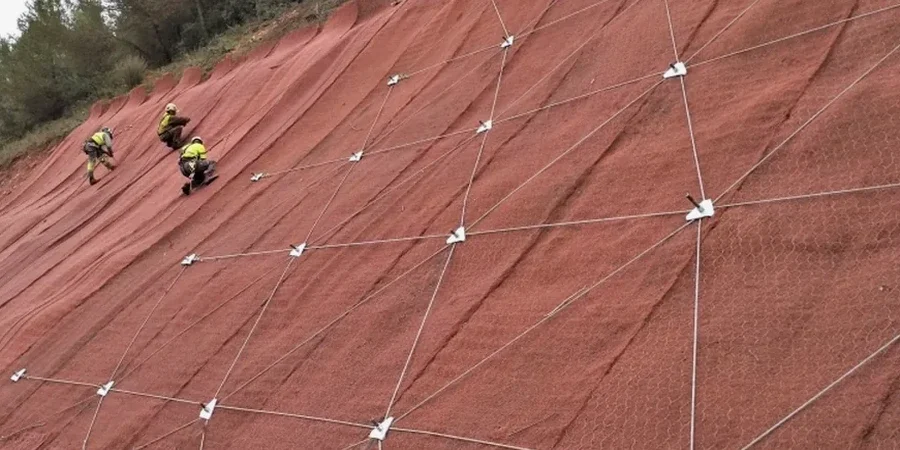
The 2024 Kentucky Building Code, incorporating IBC Chapter 18, mandates specific geotechnical investigation for any development on slopes steeper than 15 percent. Lexington's Inner Bluegrass region presents exactly this challenge across much of the southern and eastern development corridors. Our laboratory processes soil samples from sites along Man o' War Boulevard and the Hamburg area where weathered limestone residuum creates complex stability conditions. The analysis determines factor of safety against rotational failure, translational sliding, and wedge failure modes using parameters derived from direct shear and triaxial testing. For deeper investigations where bedrock topography influences failure planes, we often pair slope modeling with seismic refraction surveys to map the soil-rock interface without excessive borings. The resulting geotechnical report provides the design parameters and recommendations that Lexington-Fayette Urban County Government plan reviewers require before issuing grading permits on hillside lots.

A slope stability analysis is not a template report. Every Lexington hillside has its own stratigraphy, groundwater regime, and failure history that must be understood before the first cut is made.
Our service areas

How we work

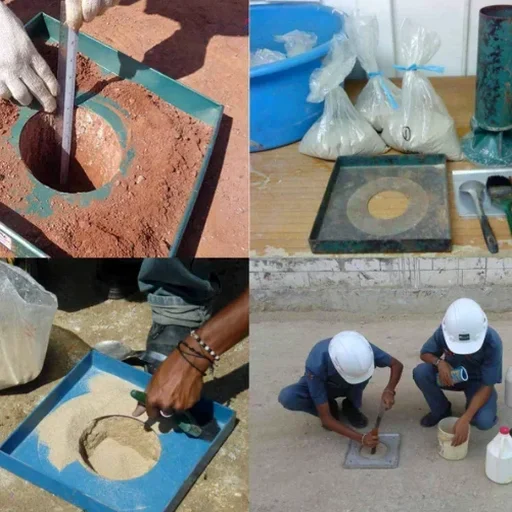
A 4-story mixed-use development off Nicholasville Road recently required analysis of a 28-foot cut slope exposing interbedded shale and limestone of the Lexington Limestone formation. The contractor needed excavation angles that balanced site geometry with long-term stability. We ran consolidated-undrained triaxial tests with pore pressure measurement on Shelby tube samples recovered from the planned cut face. The effective stress parameters revealed a friction angle of 26 degrees in the weathered shale zones, substantially lower than the intact limestone above. This data fed directly into limit equilibrium modeling using Spencer's method for non-circular slip surfaces. The analysis confirmed that a 2H:1V slope with horizontal benches every 15 vertical feet would maintain a factor of safety above 1.5 under both static and seismic conditions. Where saturated horizons were encountered, we recommended in-situ permeability testing to design horizontal drains that prevent pore pressure buildup behind the cut face.
Slope Stability Analysis in Lexington KY: Geotechnical Engineering for Safe Development
Technical reference — Lexington

Local geotechnical context

The boring rig arrives on site with hollow-stem auger capability to penetrate the residual clay and weathered rock typical of Fayette County's karst terrain. We advance borings to at least twice the planned cut height or until competent bedrock is confirmed through SPT refusal. Shelby tube samples are extruded in the field, sealed with wax, and transported to the laboratory under chain-of-custody protocols. The risk of skipping this step is not theoretical: Lexington's residuum soils lose significant strength when saturated, and undetected clay seams within the limestone can act as preferential failure surfaces. A slope that stands through three dry summers can fail in one wet spring. The laboratory testing quantifies this strength loss so the design accounts for worst-case groundwater conditions rather than the conditions observed on the day of drilling.

Need a geotechnical assessment?

Reply within 24h.

Email: contact@geotechnicalengineering.biz

Regulatory framework

IBC 2024 Chapter 18 (Soils and Foundations), ASCE 7-22 Chapter 11 (Seismic Design Criteria), ASTM D1586 (Standard Penetration Test), ASTM D4767 (Consolidated-Undrained Triaxial Test), KYTC Geotechnical Manual (slope design guidance)

Reference parameters

ParameterTypical value
Minimum factor of safety (static)1.5
Minimum factor of safety (seismic)1.1
Analysis methodLimit equilibrium (Spencer/Morgenstern-Price)
Laboratory shear strength testsCU triaxial with pore pressure
Field investigation methodRotary wash borings with SPT
Groundwater modelingSteady-state and rapid drawdown
Seismic coefficient (Lexington)Ss = 0.162g per ASCE 7-22

Questions and answers

How much does a slope stability analysis cost for a Lexington residential lot?

For a single-family residential hillside lot in Lexington, the complete slope stability analysis—including drilling, laboratory testing, and the engineering report—typically ranges from US$1,360 to US$4,160. The final cost depends on the number of borings required, the depth to bedrock, and whether groundwater monitoring wells are needed. Sites with complex stratigraphy or previous fill placement tend toward the higher end of the range.

What triggers the requirement for a slope stability analysis under Lexington building codes?

Lexington-Fayette Urban County Government requires slope stability analysis whenever grading plans propose cuts or fills exceeding 10 feet in height on slopes steeper than 15 percent. The analysis must demonstrate a static factor of safety of at least 1.5 and a seismic factor of safety of at least 1.1 using the design ground motions specified in ASCE 7-22. The geotechnical report must be sealed by a Kentucky-licensed professional engineer.

How long does the entire analysis process take from start to finish?

From the day the drilling crew mobilizes to the day you receive the sealed report, expect 3 to 4 weeks. Field investigation takes 1 to 3 days depending on access and number of borings. Laboratory testing requires 10 to 14 days for triaxial consolidation and shear phases. Analysis and report preparation adds another week. Expedited turnaround is available when construction schedules demand it.

Location and service area

We serve projects in Lexington and surrounding areas.

View larger map